Monthly Archives: November 2014

Alpha-gal (Meat) Allergy

Alpha-gal allergies are a reaction to Galactose-alpha-1,3-galactose, whereby the body is overloaded with immunoglobulin E antibodies on contact with the carbohydrate. Alpha-gal is found in all mammals apart from primates (including humans). Bites from the lone star tick, which transfer this carbohydrate to the victim, have been implicated in the development of this delayed allergic response which is triggered by the consumption of mammalian meat products.[1] Despite myths to the contrary, an alpha-gal allergy does not require the afflicted to become a vegetarian, as poultry and fish do not trigger a reaction.

The allergy most often occurs in the central and southern United States, which corresponds to the distribution of the lone star tick.[3] In the Southern United States, where the tick is most prevalent, allergy rates are 32% higher than elsewhere.[4] However, as doctors are not required to report the number of patients suffering the alpha-gal allergies, the true number of affected individuals is unknown.

Allergy

The allergy was first formally identified as originating from tick bites in a 2007 paper by Sheryl van Nunen. Prior to the paper’s publication, Thomas Platts-Mills and Scott Commins, were attempting to discover why some patients were reacting negatively to the carbohydrate in the cancer drug Cetuximab.[6][7] They had previously hypothesized that a fungal infection or parasite could lead to the allergy.[6][8] It wasn’t until Platts-Mills was bitten by a tick and developed alpha-gal allergies, that his team also came to the conclusion that there was a link between tick bites and the allergy.[8]

Alpha-gal allergies are very similar to Pork-Cat Syndrome and hence misidentification can occur.[9]

Cause

Alpha-gal allergies develop after a person has been bitten by the Lone Star Tick in the United States, the European Castor Bean Tick, and the Paralysis Tick in Australia.[6][7] Alpha-gal is not naturally present in apes (including humans), but is in all other mammals. If a tick feeds on another mammal, the alpha-gal will remain in its alimentary tract.[2] The tick will then inject the alpha-gal into a person’s skin, which in turn will cause the immune system to release a flood of immunoglobulin E antibodies (a.k.a. IgE) to fight off the foreign carbohydrate.[2][6] Researchers still do not know which specific component of tick saliva causes the reaction.[10]

A 2012 preliminary study found unexpectedly high rates of alpha-gal allergies in the Western and North Central parts of the United States, which suggests that the allergy may be spread by unknown tick species.[4] Examples of alpha-gal allergies were even present in Hawaii, where none of the ticks identified with the allergies live.[10] Human factors were suggested but no specific examples were provided.[4]

Symptoms

A typical allergic reaction to alpha gal has a delayed onset, occurring 4–8 hours after the consumption of mammalian meat products, instead of the typical rapid onset with most food allergies. After the delayed onset, the allergic response is typical of most food allergies, and especially an IgE mediated allergy, including severe whole-body itching, hives, angioedema, gastrointestinal upset, and possible anaphylaxis.[11] These symptoms are caused by too many IgE antibodies attacking the allergen, in this case the alpha-gal.[6] In 70% of cases the reaction is accompanied by respiratory distress and as such is particularly harmful to those with asthma.[12]

Alpha-gal allergies are the first food allergies to come with the possibility of delayed anaphylaxis.[12][13] It is also the first food-related allergy to be associated with a carbohydrate, rather than a protein.[13][14]

Treatment and medical issues

Blood tests for IgE response indicating alpha gal allergy have not been approved by the U.S. Food and Drug Administration (FDA), and must usually be purchased by private individuals, but are available and are in use.

Alpha-gal is present in cancer drugs, as well as the IV fluid replacements Gelofusine and Haemaccel.

There has been at least one instance of a man with an alpha-gal allergy going into anaphylaxis after receiving a heart-valve.[6] Some researchers have suggested that the alpha-gal which is prevalent in pig’s tissue, and used for xenografts, may contribute to organ rejection.

Unlike most food allergies, the alpha-gal allergy will recede with time, as long as the person is not bitten by another tick. The recovery period can take anywhere from eight months to five years.

A new type of cancer treatment called HyperAcute immunotherapies, which utilizes humans’ usual immunity to alpha-gal is being tested by NewLink Genetics Corporation.[16] The treatment uses modified alpha-gal cells to provoke a strong reaction in the immune system, but targeted towards cancer, rather than attacking the alpha-gal cells themselves.[17] As of November 2013, the treatment was in a Phase 3 Trial with the FDA.[16]



Celiac Syndrome

The Controversy of Celiac Disease (Gluten Sensitivity)

The problem here is that we define a complex autoimmune disease spectrum by a traditional and end-stage histologic finding. Better tools are on the way… There is a spectrum of gluten intolerant disorders. I vote that she has gluten intolerance which is also called celiac syndrome. Treatment is a gluten free diet. Only the top 30% of gluten intolerant people meet the criteria of celiac disease with positive blood work and biopsy. The other 70% are not able to be diagnosed by current criteria but definitely have gluten intolerance or celiac syndrome.

A number of people without celiac disease may feel better on a restrictive diet, but I suspect for a lot of them it’s because their diet is now healthier. I have seen a lot of this and found out that it’s the lack of processed and junk foods rather than the lack of gluten that works for them. Just something to think about.


Fungal Issues and Gluten Sensitivity

Fungal Allergies and Sinus Issues

Overview

yeast_top_01_large-300x74Yeast, Candida, Thrush, Monilia, Mold, and Fungus are all terms that we routinely use interchangeably and incorrectly. This is often confusing to both physicians and patients. Mycology is the “study of” fungi and we really have very little of it in medical school. There are really separate pathologic conditions we must differentiate in order to understand the condition. Unfortunately, there is no rule that you cannot have a combination of things affecting you.

Fungal Sinusitis

Fungal sinusitis is really nebulous term that implies there are fungi creating problems within the paranasal sinuses. By definition there really must be some objective findings on a CAT scan of the sinuses. If indeed there are fungal organisms in the sinuses, these can cause inflammation via a number of mechanisms. First, by the fact that they are sitting there in close contact with our sinonasal mucosa, it is more likely that we develop sensitivities or allergies to them. No matter if there are allergies to the fungi or not, removing them from the sinonasal passages is paramount.

Allergic Fungal Sinusitis

When there are fungal organisms inappropriately occupying the sinuses they will often elicit an allergic response. The CT is often impressive for multiple fungal organisms and the allergy tests seem to correlate. Dr. Bradley Marple and colleagues at Dallas Southwestern really described this condition called Allergic Fungal Sinusitis. The treat ment is meticulous surgical debridement and subsequent allergic desensitization.

Eosinophilic (non allergic) Fungal Sinusitis

Mayo clinic physicians have discovered a non allergic (but immune mediated) inflammatory response to molds which causes sinusitis as well. They have termed this Eosinophilic Fungal Sinusitis. It is primarily Cell Mediated (not IgE Mediated) and seems to be related to a specific mold Alternaria. Again, removing any and all molds and then controlling the immune response is the treatment. They actually propose rinsing the sinonasal passages with antifungal agents.

Invasive Fungal Sinusitis

Invasive fungal disease really is largely limited to immunocompromised patients. We often see these as urgent life threatening conditions on the oncology ward. We immediately try to remove all of the offending fungi, however the survival of the patient is really more dependent on the patient mustering some type of an immunologic response. Whether or not the patient has allergies, it rarely makes sense to desensitize an immunocompromised patient.
Candidiasis and Mold Allergies

Fungi can also cause patients problems even if there sinuses are not loaded with organisms. In these patients, the CAT scan is less impressive and surgery is not in the treatment regimen.

Mold Allergies

Allergy to molds is a common ailment and can really keep patients miserable on a year round basis. Molds are often airborne20and unfortunately can cause symptoms on a year congestion, and fatigue. They can readily be diagnosed by either skin or blood testing for IgE against each type of mold. Again, removing the fungi and then desensitizing the patient is the treatment.

Candidiasis/Yeast

Candidiasis is really a diagnosis of exclusion, and a questionable one at that. Dr. William Crooks defined the condition as an overgrowth of yeast primarily within our digestive tract that leads to a chronic inflammatory state. It too is treated with elimination of the molds as much as possible, and then setting up conditions to avoid recurrent yeast overgrowth. These treatment options really seem to help a lot of patients, I am just not sure we understand the pathophysiology of what is really going on. In treating these patients we often try dietary manipulation that would preclude fungal overgrowth. This is often a low carbohydrate or gluten free type of diet. I suspect this may be the major reason these people feel better.

Gluten Sensitivity

Gluten intolerance (Celiac Disease) is probably an under recognized entity.  There is certainly a large portion of the population that has some sensitivity to gluten and feels much better avoiding it.  Whether or not they meet the criteria for Celiac seems academic.

Summary

For whatever reason, many patients seem to get clinical benefit from antifungals, probiotics, and or dietary changes. This makes sense, in that lessening exposure to substances patients are sensitive to, would make them feel better. Likewise, desensitizing them with immunotherapy, also seems to be helpful.


What is new in post op tonsillectomy?

Recovering From Throat Surgery

Unknown-4Recovering from throat surgery such as tonsillectomy, uvuloplasty, and or base of tongue surgery can be excruciating. There is no pain therapy that is out of bounds. I give 12 mg Decadron intra operatively and generously inject Exparel into the operated on area.

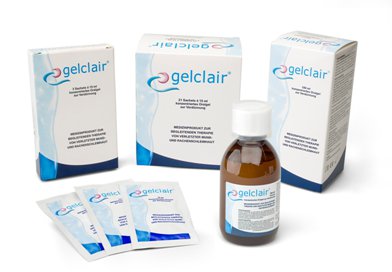
Topically Gelclair can be very helpful. It forms a barrier (similar to but also superior to Carafate). Magic mouth rinse with topical anethestics or Numbing throat sprays (Chloraseptic) can be temporarily helpful.

confezioniI personally use 10 mg of ocycontin po q 12, Lortab Elixir, Motrin Elixir and Amoxacillin or Zithromax Elixir. A Medrol Dose pack can be utilziled. Toradol can also be helpful, although bleeding risk must be considered.

Higher dose steroids (Prednisone) and or more powerful sustained release narcotics such as Oxycontin or Dilaudid can be considered.