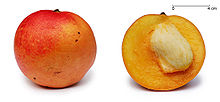
 Should a patient with proven allergy to cashew and pistachio always be told to avoid mango or should a separate evaluation for mango allergy be carried out on a case by case basis? Thank you for your advice and help.
As you know, the evergreen tree family includes mango, pistachio, cashew, and poison ivy.
The exact incidence of mango allergy is unknown. However, there have been series of patients with food allergy where the incidence of reactions to mango has been compared with that to other foods. For example, in a series of 132 children, ages 3 to 19 years, there was one case of mango allergy compared to cow’s milk in which there were 11 cases (1).
In another study carried out over nine years, in 580 patients with food allergy, mango was responsible for 6% of the foods to which patients reacted. This study was conducted in France (2).
Thus, although the exact incidence of reactions to mango remains unestablished, it is obvious that compared to other foods, reactions to mango occur less frequently.
Mango contains a number of different allergens which are found in many other foods besides pistachio and cashew. For example, there is a fruit profilin in mango which is also found in pear, peach, and apple. There is a panallergen found in celery, carrot, apple, peanut, paprika, anise, fennel, coriander, and cumin that demonstrates cross-reactivity with mango. Mango has also demonstrated cross-reactivity to foods in the “latex-fruit cross-reactivity syndrome.” A chitinase-like protein cross-reacting with latex has been found in mango as well as avocado, chestnut, banana, kiwi, tomato, passion fruit, and papaya.
Thus, the allergen profile of mango is complicated, and cross-reactivity spanning many other foods has been shown in vitro. Based upon the biological family containing mango, pistachio and cashew nut, one would expect there to be cross-reactivity between mango and these two nuts. However, such cross-reactivity probably occurs less frequently than predicted by the biological taxonomy of these foods (3).
Cross-reactivity has, as you know, been shown to exist between cashew and pistachio nut. However, this cross-reactivity did not extend to mango pulp, although it was present in mango seed (4).
Thus, based upon in vitro studies, there has been surprisingly little cross-reactivity demonstrated between mango pulp and pistachio and cashew. On the other hand, pistachio and cashew, as you know, demonstrate a great deal of cross-reactivity based on in vitro studies.
A similar profile is seen when one looks at case reports of patients reacting to mango. There are a number of case reports of allergic reactions to mango. In some of these, patients have also shown clinical reactivity to pistachio or cashew (5, 6). However, there clearly have been patients who have reacted to mango and yet tolerate pistachio and cashew nut without difficulty (7).
Taking all of these data and reports into consideration, one can draw the following conclusions:
1. The exact incidence of mango allergy is unknown, but clearly reactions to this fruit occur far less frequently than more common culprits.
2. There is an unexpectedly sparsely demonstrated in vitro cross-reactivity between mango and cashew, and pistachio. However, there is strong cross-reactivity between cashew and pistachio.
3. Clinical cross-reactivity varies. Some patients who react to mango have demonstrable cross-reactivity to pistachio or cashew, and others do not.
Thus, when faced with giving advice to a patient who has mango allergy, unfortunately there is no axiomatic approach. The only true test of allergy to a food, especially when we do not have negative and positive predictive value for in vitro tests, is an oral challenge. This clearly applies to potential cross-reactivity to pistachio and cashew in a patient with mango allergy.
One can gather information regarding potential allergy by skin test and serum-specific IgE determinations, but definitive information is not available.

 Oral Allergy Syndrome, also known as pollen-food syndrome is caused by cross-reactive allergens found in both pollen and raw fruits, vegetables, and some tree nuts. Those with oral allergy syndrome typically have issues with the inhalants: birch, ragweed, and grass. The cross reactors are as follows: